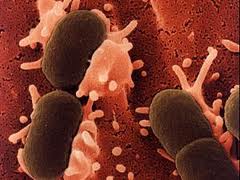
Already 35 people have died from the outbreak of E. Coli bacteria in Germany and several other European countries. While 812 of 3256 of those infected are still struggling to beat death, a report based Center for Disease Prevention and Control Europe
Already 35 people have died from the outbreak of E. Coli bacteria in Germany and several other European countries. While 812 of 3256 of those infected are still struggling to beat death, a report based Center for Disease Prevention and Control Europe
The majority experienced bloody diarrhea, and not a little suffering kidney complications because of E. Coli.
These case was obviously spread panic throughout the world. Fear is quite reasonable because E. Coli is a type of bacteria found everywhere: water, food, soil, toilet, kitchen, until the air.
Must be vigilant. However, it should be underlined that not all dangerous E. coli. Only certain types can lead to serious illnesses, such as E. Coli strain O104: H4 is endemic in Germany recently, and the E. coli strain O157: H7 outbreak in the United States in 1982.
Types O104: H4 was included as one of Enterohaemorrhagic E. Coli (EHEC), which can cause an infected experience bloody diarrhea. Even these cases often progress to haemolytic uraemic syndrome (HUS), a disease that can cause kidney failure and other complications of other infections.
E. coli live in the temperature of 7 degrees centigrade and die at a temperature of 70 degrees centigrade. So if food is properly cooked, the bacteria will die.
To avoid the dangers of E. Coli, see the guide Katherine Zeratsky, RD, LD, Mayo Clinic nutrition expert:
1. Note the appearance, smell and taste of food and drink before going into the body.
2. Wash food thoroughly. Rub entire surface with a soft.
3. Wash hands, furniture, and kitchen utensils with soap and warm water before use.
4. Separate raw food from ready meals.
5. Cook until cooked food with a minimum temperature of 71 degrees centigrade.
6. Keep food with good storage techniques in the refrigerator.
7. Avoid juices, dairy products, and unpasteurized apple drink.
8. Avoid consumption of beverages from water sources polluted.


